Heavy Equipment Transport: What Really Goes Into Moving a Machine

Moving an excavator or a crane is nothing like shipping a pallet. Heavy equipment transport involves weight limits, trailer selection, state permits, and route planning that all have to line up before a truck ever rolls. If you have never arranged one of these moves, the process can feel like a black box. Here is how it actually works.

When your load becomes “oversize”

Federal rules set the baseline for heavy equipment transport on the road without a permit: 8 feet 6 inches wide, 13 feet 6 inches tall, and 80,000 pounds gross vehicle weight. Cross any one of those, and you need a permit from every state your load will pass through. Permits are trip- and route-specific, so approval for one lane does not carry over to another. Loads far past those limits, often above 150,000 pounds, get classified as superloads and can require a route survey and bridge analysis first.

That one detail explains most of the surprises in heavy equipment transport pricing. A machine that stays legal moves cheaply. A machine that needs permits, signage, and pilot cars costs considerably more.

Trailer choice drives everything

The deck under your machine decides whether you clear bridges at all, so trailer selection is the heart of heavy equipment transport.

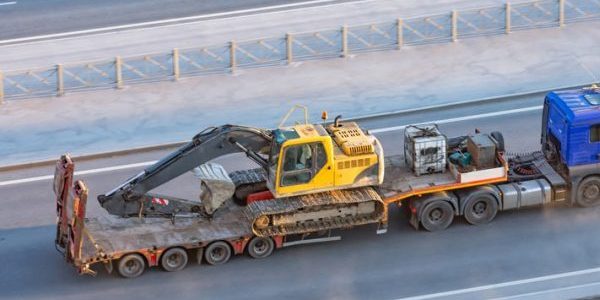
A standard flatbed sits roughly five feet off the ground and usually carries two or three axles. It handles raw materials and shorter construction vehicles well. A drop deck, also called a step deck, lowers the main surface to about three and a half feet, which buys you height. Double drop and lowboy trailers sit lower still, around 29 inches off the ground, and that clearance is what lets a tall excavator pass under an overpass legally. For the heaviest pieces, nine-axle setups spread weight across more contact points to stay inside bridge limits.

Getting this wrong is expensive. Too tall for your route means rerouting, re-permitting, or breaking the machine down and paying to reassemble it.

What your carrier needs from you
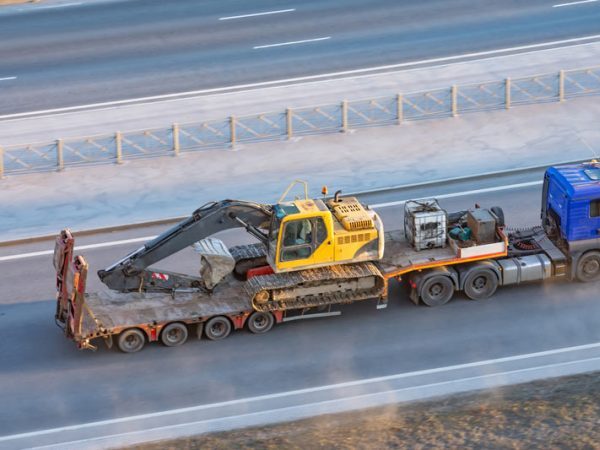
second example of osage preforming heavy equipment transport -ation.

Accurate numbers are not paperwork for its own sake. Four details shape the entire heavy equipment transport plan:

  • Weight of the commodity, which determines the vehicle and equipment assigned
  • Exact dimensions, which decide the trailer type and permit class
  • Pickup location and destination, which shape the route and surface obstacles early
  • Type of commodity, since some machines need specialized handling

Guess on weight and the wrong trailer shows up. Guess on height and you find out at a bridge.

Budgeting realistically

Open-deck heavy haul rates in 2026 generally run from about $2.50 to $8.00 per loaded mile, with specialized RGN, lowboy, and multi-axle work sitting near the top of that range. Priced per machine, construction equipment commonly lands between $2,000 and $5,000 per piece. Three things move that number: whether the load is oversize, how far it travels, and insurance, since pricier equipment carries a higher premium. Ask for an itemized invoice so you can see which one is driving your cost.

Tracking matters more than people expect

On a pipeline spread or a phased build, machines have to arrive in sequence. A dozer that lands before the site is graded is a cost, not a delivery. Dependable carriers document every movement, keep proof-of-delivery paperwork on every load, and can pull up load photos when a billing question comes up.

How we handle heavy equipment transport

At Osage Specialized Transport, we have been at this since 1995, under the same 50/50 ownership the whole time, with more than 75 years of combined experience in transportation, operations, and safety. We run a routine fleet of 40 to 50 trucks throughout the continental United States, with capability into Canada and Mexico. Our internal dispatch program lets us track every machine we move, every time we move it, and we help with loading and unloading on site. We have hauled for Caterpillar, John Deere, Komatsu, and Link-Belt dealers, and for the Ruby, Keystone, and Rover pipeline projects.

Planning heavy equipment transport? Send us the weight, dimensions, route, and commodity type, and we will tell you what trailer fits and what permits it takes.

CVSA Roadcheck 2024

Essential Guide for Trucking and Heavy Hauling

The CVSA Roadcheck 2024, happening from May 14th to 16th, is a significant event for the trucking and heavy hauling industry. Organized by the Commercial Vehicle Safety Alliance (CVSA), this annual 72-hour initiative involves rigorous inspections of commercial motor vehicles across North America, aiming to enhance road safety and compliance. At Osage Specialized Transport, we are now in the thick of it, ensuring their fleets and drivers meet stringent safety standards.

Understanding the CVSA Roadcheck

CVSA roadcheck

During the CVSA Roadcheck, enforcement officials across Canada, the United States, and Mexico conduct the North American Standard Level I Inspection. This comprehensive inspection covers both the vehicle’s mechanical fitness and the driver’s adherence to safety regulations. Inspectors examine items such as brake systems, cargo securement, lights, steering mechanisms, and tires, alongside drivers’ hours of service documentation and license validity.

Why CVSA Roadcheck Matters for Trucking and Heavy Hauling Companies

The CVSA Roadcheck is not just about compliance; it’s a critical measure of a company’s operational integrity and commitment to safety. For businesses like Osage Specialized Transport, excelling in these inspections can have numerous benefits:

  • Enhanced Safety: The primary objective of CVSA Roadcheck is to identify and mitigate potential safety hazards. Companies that consistently prepare for and pass these inspections likely operate safer fleets.
  • Reduced Costs: By identifying and addressing maintenance issues before they become severe, companies can avoid costly repairs and downtime.
  • Improved Reputation: Companies that fare well in inspections are often regarded as reliable and compliant, which can enhance business opportunities and customer trust.
  • Regulatory Compliance: Staying compliant with transportation regulations helps companies avoid fines and penalties, ensuring smooth operations.

How to Prepare for CVSA Roadcheck 2024

1. Comprehensive Vehicle Checks: Regular vehicle maintenance should be a priority year-round, not just during Roadcheck. However, in the weeks leading up to the event, it’s wise to conduct thorough checks on braking systems, lights, tires, wheels, and cargo securement systems. Any sign of wear and tear or potential malfunctions should be addressed immediately.

CSVA roadcheck

2. Driver Training and Documentation: Drivers should have all necessary licenses and documents, including a valid Commercial Driver’s License (CDL), up-to-date medical certificates, and a record of duty status. Training sessions focusing on Hours of Service (HOS) regulations, proper logging practices, and emergency procedures are invaluable.

3. Focus on Cargo Securement: Given that cargo securement has been a special focus in past Roadchecks, ensuring that all cargo is secured properly according to the latest safety guidelines is crucial. This reduces the risk of accidents caused by shifting or lost cargo.

4. Mock Inspections: Conducting internal mock inspections can help identify potential issues before the actual Roadcheck. This practice can help drivers feel more prepared and less stressed about the inspection process.

Potential Focus Areas for 2024

The specific focus areas for CVSA Roadcheck 2024 have been revealed and announced. It is beneficial for companies to review these areas and address any related issues that have been highlighted in previous years. For instance, braking systems and Hours of Service compliance have often been areas of emphasis. Companies should review their past inspection reports to identify any recurring issues and focus their preparatory efforts accordingly.

The Impact of Technology on Compliance

While specific focus areas for the 2024 Roadcheck have been emphasized, companies should pay special attention to their fleets’ braking systems, hours of service compliance, and cargo securement practices. These areas are often scrutinized due to their direct impact on road safety.

Technology continues to significantly influence the trucking industry, particularly in compliance and safety enhancements. Tools like ELDs provide accurate data that can streamline the inspection process, reducing the likelihood of human error and ensuring drivers stick to their hours of service limits. Advanced diagnostics and telematics systems also play a crucial role in monitoring vehicle health and performance, aiding in preventive maintenance that can preempt issues before they become serious.

Conclusion

As CVSA Roadcheck 2024 continues, trucking and heavy hauling companies are given a vital opportunity to demonstrate their commitment to safety and compliance. For Osage Specialized Transport, thorough preparation and proactive management are key to navigating this challenging period successfully.

By investing in rigorous vehicle maintenance, ensuring thorough driver preparation, and leveraging advanced technologies, companies can not only meet but exceed the stringent requirements of the Roadcheck, enhancing their operational safety and efficiency. Let’s champion these practices not just during Roadcheck, but as a permanent standard for the industry, ensuring safer roads for everyone.

Why Choose Osage for Your Specialized Transport?

Companies that need to ship machinery or equipment across states or even across the country need to use heavy haul trucking. When transporting overweight or oversized equipment, specific considerations must be made, especially if the trip crosses state lines. Each state has its own set of rules and requirements for transporting equipment on its highways, …

Semi-Trailer Transport Services: Open vs. Enclosed

The choice of whether to transport your heavy load in an open or enclosed trailer can be a difficult one to make. Many factors need to be considered. However, this article presents you with some information to help you differentiate between the two and make an informed decision when transporting your heavy load wherever, whenever. Open Vs. …

What Should Be in a Construction Logistics Plan?

Logistics is an essential part of project management, especially in the construction industry. There are a lot of moving parts on a construction site, so planning for everything is key. Here’s what should be included in a construction logistics plan. The Environment Before you break ground, you should have a solid understanding of the environment …

What is the Largest Size Shipping Container?

Shipping containers are an indispensable part of global trade, revolutionizing the transportation industry with convenience and efficiency. These standardized steel boxes have transformed how goods are transported across continents, making cargo movement safe, secure, and cost-effective. In this blog post, we delve into the realm of mega-shipping containers, specifically exploring the largest-size shipping containers available …

What are Standard Shipping Container Sizes?

Understanding the different sizes and types of shipping containers is crucial for international trade or shipping businesses. Standardized shipping containers play a pivotal role in global logistics, ensuring the safe and efficient transportation of goods worldwide. In this blog, we will delve into the details of standard shipping container sizes, their dimensions, and the benefits …

How Do You Know If a Load Is Too Heavy?

When it comes to transporting freight, determining the weight and suitability of a load is essential for ensuring the safety of the transportation vehicle and complying with legal requirements. Carrying an excessively heavy load can result in various consequences, including damage to the goods, increased fuel consumption, and an even higher risk of accidents. In …